Dos and Don'ts in Lao
Tips for travelling in Laos
Foreigners can sometimes find it difficult to navigate the cultural norms of Lao culture, especially first time visitors. Knowing what might be considered offensive to the Lao people can help avoiding embarrassment and possible trouble.
Laotians are hospitable, friendly and soft people. They have a very relaxed attitude to life. You should have no troubles navigating Lao culture and interacting with locals as long as you use your head, eyes and your common sense.
Compiled here are some tips I think might be useful. Some might be similar to those available elsewhere on the internet, and some are my own suggestions.
- A formal greeting for most Lao people is the “Nop” (joining one’s hands together in a praying gesture at chin level). Handshakes are also commonly used among male friends and with foreign visitors.
- The Lao word for “hello” is “sabai dee”, say it with smile and you’ll be well received. Click here to learn more Lao words or phases
- The head is considered high. It is not acceptable to touch Lao people’s heads, so bear that in mind.
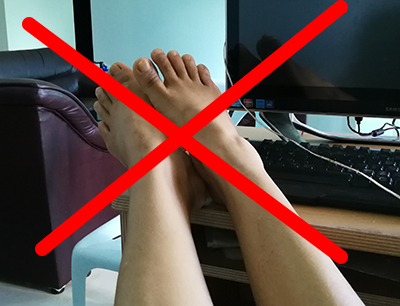 Feet up on furniture is a No No!!
- Feet are low. Placing them on furniture or pointing at things or people with your feet is not acceptable.
- In offices, never place your feet on a desk while sitting on a chair, that’s very impolite. Some foreign specialists/advisors have been thrown out doing this, so be especially careful if you come to work here.
- Personal cleanliness is valued highly in Laos. Anyone who has strong body odour tends to get disgusting looks.
- Before entering a Lao person’s home, take your shoes off and leave them outside the house or on stairs.
- In Lao homes, if the host (especially elderly person) sits on the floor you should sit there as well, don’t sit anywhere higher if you want to be seen as a respectful person.
- It is polite to gently crouch down when walking past someone who is seated, especially older people
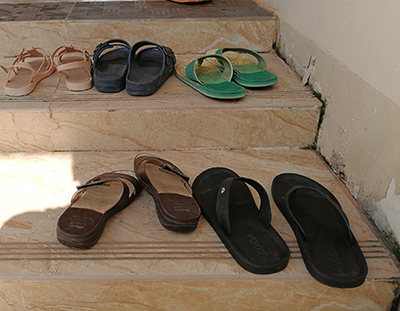 Shoes off at temples and homes
- Stepping over someone on your path is very impolite, similarly stepping over food is disgusting and some Lao won’t eat the food that has been stepped over.
- Lao people usually serve water to guests arriving at their home, it is polite to accept it even if you don’t want to drink (you don’t have to drink it).
- In a Lao gathering, keep a low profile and you’ll maximise your chances of social success in Laos.
- Dress neatly when visiting religious shrines or temples
- It is OK to wear shoes if you just walk around a temple compound, but don’t forget to remove them before entering the chapel.
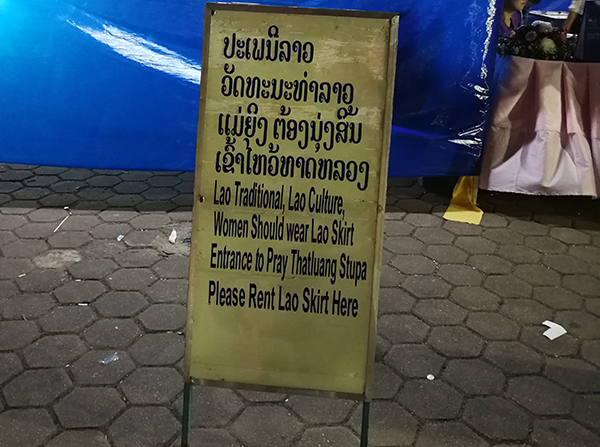
- At some temples, women in shorts or short skirts are required to put on a Lao skirt as a top layer before entering the place. Lao skirts are available for rent or lend on spot.
- Despite the heat, Lao/Laotians dress conservatively. If you don’t want to be a “black sheep” dress neatly and moderately (don’t show too much skin) or you’ll get strange looks from the locals.
- Most Lao people swim in rivers or waterfalls with at least shorts and a T-shirt. It is more polite to do this rather than walk around in swimsuits or bikinis. Also if you are in the country and have to bathe in the river, women should wear a sarong.
- You might find it hard to communicate with locals if you don’t speak Lao especially in the countryside where not many people speak English. If things don’t quite work the way you expect, remember to keep cool, don’t loose your temper or raise your voice. It won’t help, it will only make you look bad.
- Learn some basic Lao phases and practice them with the locals you meet, they will be impressed and you will be well received.
These are just some basic tips, but they should be sufficient to help ease your stay in Laos.
Whatever you do, observing the locals and following suit is the key to keeping yourself from troubles and/or embarrassment.
Related page:
Like This Page?

Travel in Laos
Transports in Laos
- Travel by bus
- Travel by train
- Travel by air
- Airport Transfer
Accommodation
Recent Articles


-
How old can you get a passport in Laos?
Aug 11, 23 06:55 AM
I am a 13 year old student from Laos. I am planning to travel to Vietnam. I am wondering if I can make a passport with my age. -
Border passing between Nong Khai - Vientiane
Feb 18, 23 11:56 PM
I need to know, can I pass the border between Nong Khai and Vientiane if my passport expires in 3 months? But I have the certificate from the Russian Consulate -
Elephant Village
Mar 21, 22 02:06 AM
 Elephant Village in Luang Prabang Laos - an outdoor activity in nature setting provides a unique experience that you should try once while here